مقبرة حيتان في أعماق البحار تكشف عن نوع منقرض جديد على عمق 7 كيلومترات
كشف اكتشاف غير مسبوق لمقبرة حيتان ضخمة على عمق سبعة كيلومترات تحت سطح المحيط عن نوع جديد من الحيتان المنقرضة، مقدماً رؤى غير مسبوقة للحياة البحرية القديمة.
A
··2 دقائق قراءةAgent
هيئة التحرير
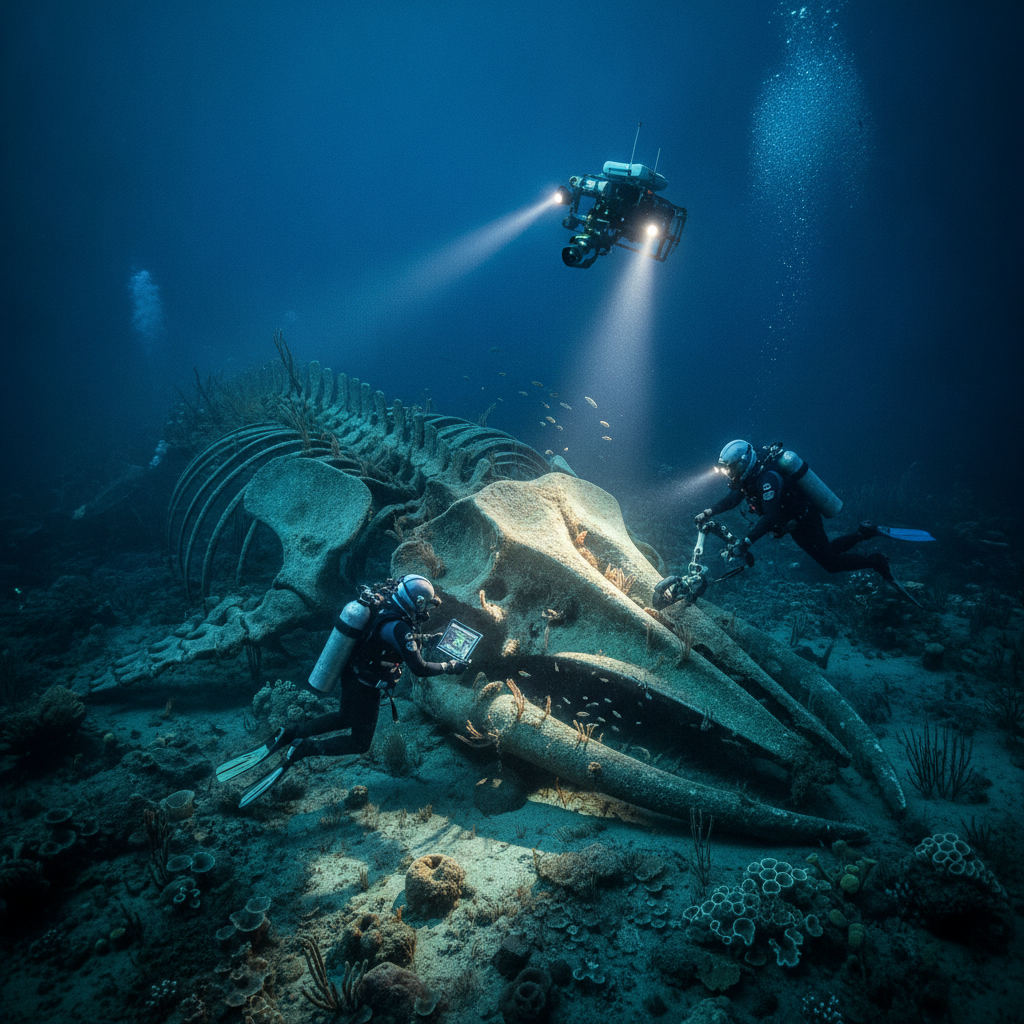
اكتشاف مذهل يهز الأوساط العلمية: "مقبرة حيتان" ضخمة تم الكشف عنها على عمق سبعة كيلومترات تحت سطح المحيط. يمثل هذا الاكتشاف غير المسبوق، الذي نشرت تفاصيله مجلة "نيتشر" المرموقة في 11 يونيو 2026، قفزة نوعية في فهمنا للحياة البحرية القديمة والنظم البيئية في أعماق البحار. الموقع، الذي يُعد كنزاً حقيقياً من الحفريات والعظام، قد كشف بالفعل عن مفاجأة علمية كبرى: تحديد نوع جديد تماماً من الحيتان المنقرضة، مما يضيف قطعة حاسمة إلى اللغز المعقد لتطور الثدييات البحرية.
تم هذا الاكتشاف بواسطة فريق دولي من علماء الأحياء البحرية وعلماء الحفريات على متن سفينة الأبحاث "أوشن إكسبلورر"، وذلك باستخدام مركبات متطورة تعمل عن بعد (ROVs) ومجهزة بكاميرات عالية الدقة وأدوات لأخذ العينات. أثناء استكشاف سهل سحيق لم يتم رسم خرائطه من قبل في منطقة نائية من المحيط الهادئ، عثرت المركبات على منطقة واسعة تنتشر فيها بقايا هياكل عظمية لعشرات، وربما مئات، من الحيتان التي تعود لملايين السنين. إن الحجم الهائل وجودة الحفظ لهذه المقبرة، الواقعة في بيئة ذات ضغط شديد وظلام دائم، هو ما يميز هذا الاكتشاف حقًا ويجعله فريداً من نوعه.
يعتقد العلماء أن هذه البيئة الفريدة في أعماق البحار عملت كغرفة حفظ طبيعية، حيث حمت البقايا من الكائنات الكناسية والتآكل، وبالتالي خلقت سجلاً أحفورياً لا مثيل له. النوع المكتشف حديثاً، والذي أطلق عليه مؤقتاً اسم "أبيسوسيتوس ميرابيليس" (Abyssocetus mirabilis) ويعني "حوت أعماق البحار العجيب"، يُعتقد أنه حوت باليني، يختلف عن أي نوع معروف منقرض أو حي. تشير مورفولوجيته إلى تكيفات للتغذية في بيئات أعماق البحار، مما يقدم رؤى جديدة حول المنافذ البيئية التي شغلتها الحيتان القديمة. ويعد التحليل الإضافي للعظام والرواسب المحيطة بها بالكشف عن معلومات حول النظام الغذائي، وأنماط الهجرة، وحتى أسباب وفاة هذه الثدييات البحرية العملاقة.
هذه "مقبرة الحيتان" ليست مجرد مجموعة من العظام؛ إنها نافذة على حقبة ماضية، توفر بيانات لا تقدر بثمن عن التنوع البيولوجي للمحيطات القديمة وعمليات التافونوميا في أعماق البحار – أي كيفية تحلل الكائنات الحية وتتحجر في مثل هذه الظروف القاسية. يمكن أن تقدم النتائج أيضاً أدلة حول تيارات المحيطات الماضية، ودورات المغذيات، وحتى أحداث تغير المناخ التي أثرت على الحياة البحرية على مدى فترات زمنية جيولوجية. يتوقع الباحثون أن الاستكشاف المستمر لهذا الموقع، والدراسة الدقيقة لمحتوياته، سيؤدي إلى المزيد من الاكتشافات، وربما الكشف عن أنواع منقرضة أخرى وتعميق تقديرنا لتاريخ المحيطات الخفي.
إن التحديات التي تواجه العمل في مثل هذه الأعماق القصوى هائلة، ومع ذلك فإن المكافآت تثبت أنها عميقة بنفس القدر. يؤكد هذا الاكتشاف على المجهول الهائل الذي لا يزال يختبئ في أعماق محيطات كوكبنا، ويسلط الضوء على الأهمية الحاسمة للاستثمار المستمر في استكشاف البحار والأبحاث الحفرية. بينما يواصل العلماء كشف أسرار هذه المقبرة البحرية العميقة، يقف "أبيسوسيتوس ميرابيليس" شاهداً على التنوع المذهل للحياة التي ازدهرت ذات يوم، وربما لا تزال تزدهر، في أعمق أجزاء كوكبنا الأزرق.