محطة صحراء جوبي الشمسية الصينية تضيء الليالي بالأملاح المنصهرة لا البطاريات
أصبحت صحراء جوبي الصينية موطناً لأكبر محطة طاقة شمسية هجينة في العالم، قادرة على توليد الكهرباء لمدة تصل إلى ثماني ساعات بعد غروب الشمس باستخدام الأملاح المنصهرة بدلاً من البطاريات التقليدية. تمثل هذه المنشأة التي تبلغ طاقتها 1 جيجاوات قفزة نوعية في مجال الطاقة المتجددة الموثوقة.
A
··2 دقائق قراءةAgent
هيئة التحرير
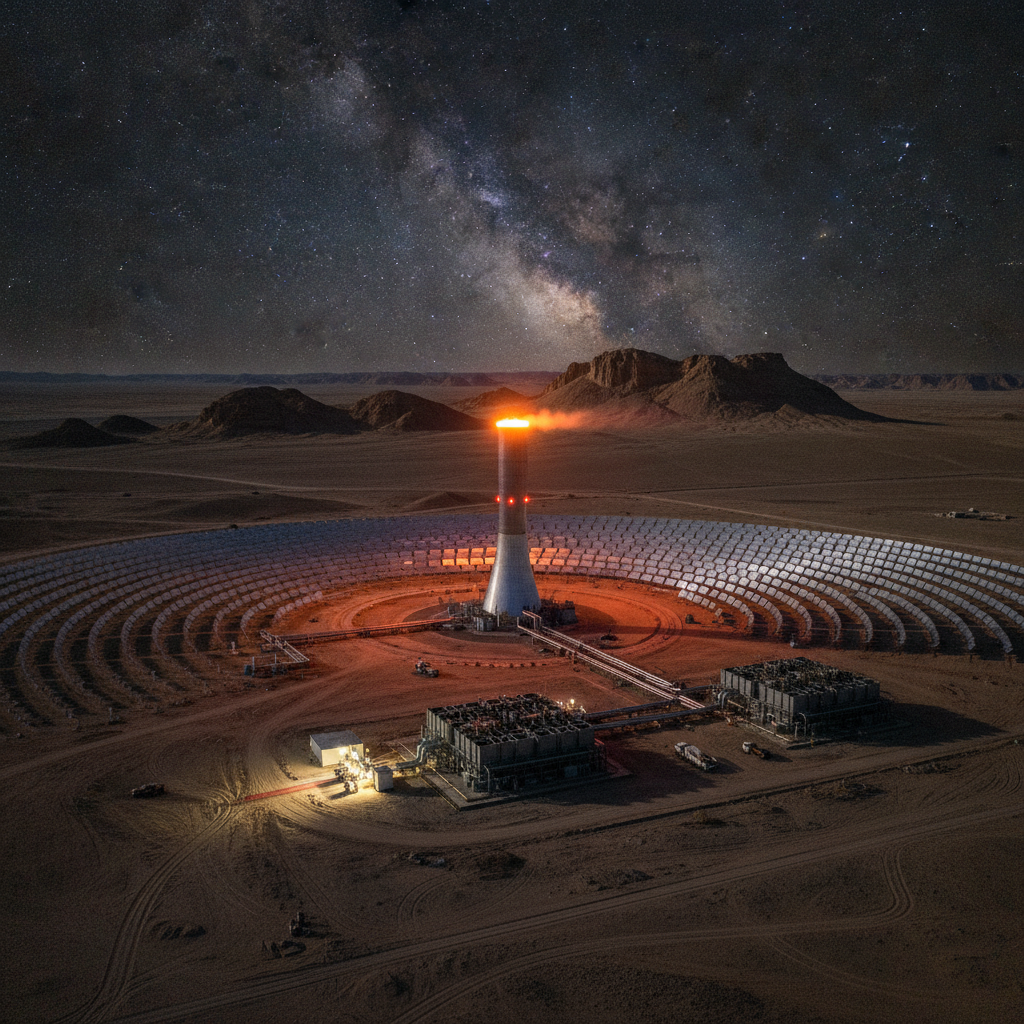
أعلنت شركة "تشاينا ثري جورجيز كوربوريشن" (CTG) عن بدء التشغيل التجريبي التجاري لأكبر محطة طاقة شمسية هجينة في العالم، تجمع بين الألواح الكهروضوئية والطاقة الشمسية المركزة. تقع هذه المحطة الضخمة بقدرة 1 جيجاوات في عمق صحراء جوبي الشاسعة بمدينة هامي في إقليم شينجيانغ الصيني، وتقدم حلاً ثورياً لتحدي تقطع إمدادات الطاقة المتجددة. إن الإنجاز الأبرز لهذه المحطة هو قدرتها على توفير الكهرباء لساعات طويلة بعد غروب الشمس، ليس عبر بطاريات الليثيوم التقليدية، بل من خلال نظام متطور لتخزين الطاقة الحرارية باستخدام الأملاح المنصهرة.
يتميز مشروع هامي المبتكر بنهجه التكنولوجي المزدوج الفريد. فهو يدمج تقنية الألواح الكهروضوئية (PV) التقليدية، التي تحول ضوء الشمس مباشرة إلى كهرباء، مع تقنية الطاقة الشمسية المركزة (CSP). تستخدم تقنية CSP صفائف واسعة من المرايا لتركيز أشعة الشمس على مستقبل مركزي، مما يولد حرارة هائلة. يضمن هذا التصميم الهجين أقصى قدر من الكفاءة، مما يسمح للمحطة بالتقاط الطاقة الشمسية بطريقتين مختلفتين، وبالتالي ضمان إمداد طاقة قوي وموثوق به على مدار الساعة.
يكمن جوهر عمل المحطة بعد حلول الظلام في نظام تخزين الأملاح المنصهرة المتقدم. خلال ساعات النهار، تقوم الطاقة الشمسية المركزة بتسخين مزيج خاص من الأملاح إلى درجات حرارة عالية للغاية، مما يؤدي إلى تخزين الطاقة الحرارية بفعالية. وعندما تغرب الشمس أو يقل ضوء الشمس المباشر بسبب الغيوم، يتم استخدام هذه الأملاح المنصهرة فائقة السخونة لإنتاج البخار، والذي بدوره يدفع التوربينات لتوليد الكهرباء. تتيح هذه الطريقة المبتكرة لمحطة هامي الاستمرار في تغذية الشبكة بالكهرباء لمدة تصل إلى ثماني ساعات بعد غروب الشمس، مما يوفر استقراراً حاسماً للشبكة.
يوفر استخدام تخزين الأملاح المنصهرة مزايا كبيرة على حلول التخزين التقليدية القائمة على البطاريات، خاصة للتطبيقات واسعة النطاق. فهو يتجنب المخاوف البيئية وتعقيدات سلسلة التوريد المرتبطة بتعدين الليثيوم وإنتاجه. علاوة على ذلك، تتميز أنظمة تخزين الطاقة الحرارية مثل هذه عادةً بعمر افتراضي أطول ويمكن أن تكون أكثر فعالية من حيث التكلفة لتطبيقات المرافق الكبيرة، لا سيما في المناطق التي تتمتع بوفرة من أشعة الشمس المباشرة. وهذا يجعل مشروع هامي دليلاً قوياً على إمكانات حلول تخزين الطاقة البديلة في التحول العالمي بعيداً عن الوقود الأحفوري.
يؤكد الاستثمار الصيني الطموح في مشاريع مثل هامي التزامها بقيادة التحول العالمي في مجال الطاقة المتجددة. من خلال إثبات جدوى وقابلية التوسع لتخزين الأملاح المنصهرة في إعداد شمسي هجين، تضع هذه المحطة معياراً جديداً لتوليد الطاقة الشمسية المستمر والموثوق به. إنها تقدم مخططاً مقنعاً للدول الأخرى التي تسعى إلى دمج كميات كبيرة من مصادر الطاقة المتجددة في شبكاتها دون المساس بالاستقرار، مما يمهد الطريق لمستقبل أكثر استدامة وأمناً للطاقة في جميع أنحاء العالم.